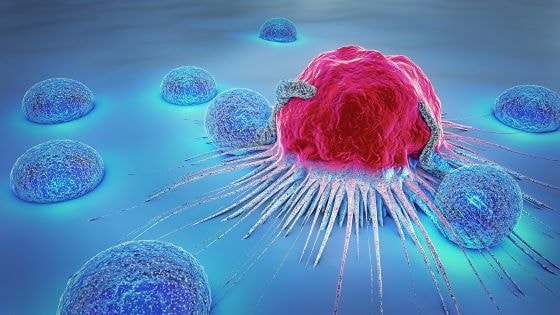
A drug that is already clinically available for the treatment of nausea and psychosis, called prochlorperazine (PCZ), inhibits the internalization of receptors on the surface of tumor cells, thereby increasing the ability of anticancer antibodies to bind to the receptors and mount more effective immune responses. PCZ enhanced the ability of anticancer antibodies to reduce tumor growth in mice, by temporarily increasing the clustering of a receptor targeted by anticancer antibodies on the surface of tumor cells. Temporary treatment of cancer patients with PCZ similarly resulted in receptor clustering on tumor cells inside of patients. The work appears March 5 in the journal Cell.
“This represents a potentially disruptive change in clinical approaches to improve therapeutic targeting as the opportunity of temporarily moving drug targets within patient tumor cells becomes possible,” says senior author Fiona Simpson, a cancer researcher at the University of Queensland. In addition to treating nausea and psychosis, PCZ is currently used in laboratory studies as an inhibitor of endocytosis, a process by which substances are brought into the cell. The temporary inhibition of endocytosis via molecules such as PCZ has been proposed for numerous clinical applications, including control of viral infection, epilepsy, and chronic kidney disease. To help move this approach closer to clinical translation, Simpson and her team recently developed an imaging method to reliably measure endocytosis in humans. When they analyzed tumor samples from patients with squamous cell carcinoma, they found that a decrease in endocytosis of a protein called epidermal growth factor receptor (EGFR) was associated with better clinical responses to the cancer drug cetuximab, an antibody that binds to and inhibits EGFR. “We found that if we stopped the drug targets getting inside the cells by inhibiting the uptake process, called endocytosis, we got a really big immune response against the tumors in mice,” Simpson says.
“This led to the concept that temporarily halting endocytosis of receptors that are the targets of monoclonal antibody therapies may be used to improve clinical outcomes,” Simpson says. Their findings suggested that endocytosis inhibition in humans, which increases the clustering of EGFR on the surface of tumor cells, thereby increasing the availability of the receptor for binding to the antibody, should lead to improved outcomes for patients treated with certain therapeutic antibodies. Exploring this idea in the new study with a different therapeutic antibody, Simpson and her team showed that PCZ improved the immune responses of tumor cells to cetuximab. In mice with cancer, combination therapy with PCZ and cetuximab reversed resistance to cetuximab therapy and inhibited tumor growth more than either treatment alone. Similarly, combination therapy with PCZ and avelumab — an anticancer antibody that inhibits a protein called programmed death ligand 1 (PD-L1) — inhibited tumor growth in mice more than either treatment alone. “These findings highlight the crucial role of availability and persistence of the molecule targeted by the therapeutic antibody at the cell surface of tumor cells,” Simpson says. To begin to test the safety of this approach in humans, Simpson and her team carried out an open-label, uncontrolled, single-center proof-of-concept study in which a single dose of PCZ was intravenously administered to patients with squamous cell carcinoma of the head and neck. Tumor biopsies were taken before and after PCZ treatment. Analysis of results from four patients showed that PCZ increased cetuximab binding sites and the clustering of EGFR on the surface of tumor cells. “As far as we can tell, this was the first verified manipulation of endocytosis in humans,” Simpson says.
Story Source: https://www.sciencedaily.com/releases/2020/03/200305132210.htm
 Webinar on Pharmaceutical Chemistry